2009年11月20日

世界末日

我没有看轰动一时的《2012》,可是我做了一些有趣的事情,就是看旧片。其中就是《The Day the Earth Stood Still》的原本影片。1951年的黑白片,看起来真有韵味。

本来要找2008年的片子,不过只找到旧的版本,于是干脆看看。心想,也许看了原版再看新版的会有所收获。

事隔50多年,新旧内容有很大的差别。相同的是,人类还是像08版内的配角所说:死性难改。黑白片的结尾非常简单,只是外星人对众科学家的一番劝告,然后扬长而去。可是我觉得这对于50年代的人们来说已经相当有意义了。然后从1996的《Mars Attack!》直到2004的《The Day After Tomorrow》,戏中还是反反复复地重复同样的“课题”:人类一定要在面临灭顶之灾的时候才会醒悟。

比较值得注意的是,为什么同样的主题重复了这么多年,我们还是一样感兴趣?难道只是电脑效果吸引了观众?不,环保课题在电影中还是有魅力的。可是这种魅力正正讽刺着我们的人性。50多年了,为什么还是要讲同样的话?感觉就象妈妈的唠叨一样,孩子还是讲不听。我很努力地回忆,可是暂时还找不到有绿色未来的电影。

然后就是场景。大家没有发觉每次故事都是从美国开始吗?因为拍戏的都是美国人?连外星人都好像很喜欢在白宫前面登陆。以上的电影都是如此,而1996的《Independence Day》里的总统更厉害,驾飞机打外星人。什么时候能让外星人尝一尝中国功夫的厉害,或者让马来西亚首相跟外星人一对一?

还有好多末日电影等着我看。可是我希望有日没有人要看了,因为这就代表这种电影不必要了——我们真的知道如何爱地球、爱人类了。

后记:新版的《The Day the Earth Stood Still》其实平平罢了,不过有句话值得注意。
No, it is not your (human's) planet.
Klaatu

2009年11月17日

蚂蚁

看了电影后,我到厨房。猪肉必须放进饭煲才能煮成猪肉粥。当我把盒子丢进垃圾桶的时候,我才看见趴在背面的蚂蚁们。

当我不以为然的转身时,我才想起——把她们连同垃圾丢进垃圾桶,不正好让她们在里面逍遥?

顿时察觉这是一个好故事的开端。不知是电影还是蚂蚁的启发。


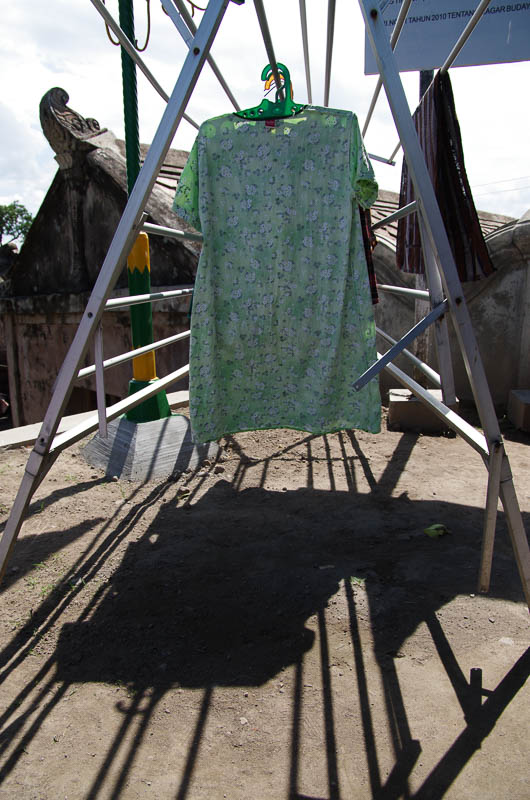
小记:What's the smell of the baking sun? It's the smell of the baked T-shirt you hang outside.

2009年11月13日

《笑愁云》


注:

年轻人,你们呻吟够了吗?周游部落格,我带着希望;周游回来,我好像没什么收获。

年轻人,你们在呻吟什么?有什么不快乐?有什么烦恼?有什么不满?有什么不足?

年轻人,你们有什么资格呻吟?去看看这世界,有多少人默默吃苦。

年轻人,你们为什么花时间呻吟?为什么不花这些浪费在呻吟上的时间干些活儿?

年轻人,为什么为赋新词强说愁?

年轻人,我再次带着希望周游部落格、书本和歌曲。请你们振作起来,写、唱、读、演出年轻人积极的一面。

2009年11月11日

教诲

今天把用过的废纸丢出去的时候,无意间看见背后的内容。


答卷,2009浩然仔摄影

那是去年生物期中考的答卷。上面写了“可惜,再加油!”原因不是分数太低,是退步。在这考试期间,老师的话再次成为了提醒。妙的是,老师的教诲能存在学生心中许久。

而我觉得可惜的是,不是很多学生懂得珍惜。

2009年11月4日

老年


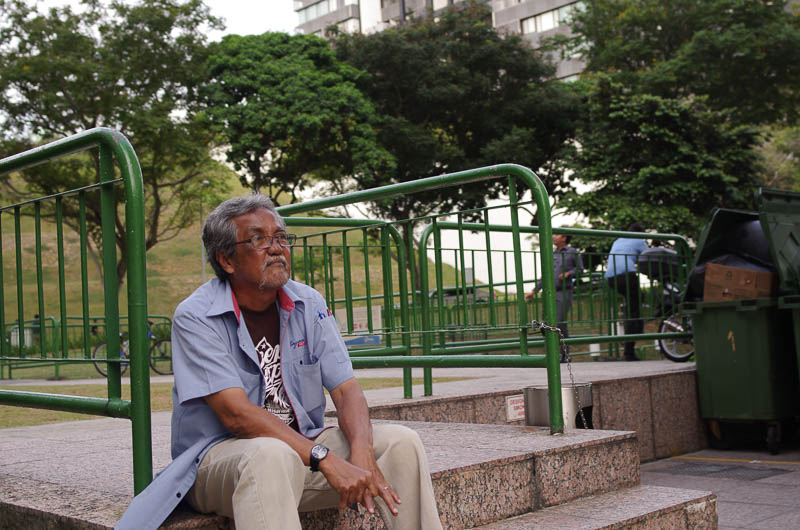
老人,2009浩然仔摄影

当我正在忙着拍摄的时候,他视若无睹的从我身边经过。一步一步的,走进了我的画框。即使他的已经老去,本来凋零的草也被他衬出美丽。

文翰的话:我现在更能体会到,人像和景物都是摄影的灵魂。

2009年11月2日

温故知新

无意间翻回旧帖,发觉了很多东西。于是,我打算花一段时间温习过去。

看回小猪和鲨鱼,读者的回应尤其吸引。文翰的回应呼应了我对现在这双皮鞋的看法:对不起,鳄鱼,你的皮成为了我的鞋子——不过请你安息,因为我会好好珍惜和发挥你皮的价值!

2009年10月28日

Bee-eater Recap

Missed the bus today, so I went to the library, and then the bee-eater Merops ornatus came into my mind. I really wanted to find out the missing part.

Somehow I asked myself, what if not every bee-eater has a tail shaft, as I supposed? Maybe the drawing was a juvenile. By looking on the chest crest, which the drawing poorly shows, it turned out to be an adult. Either mature sex has a tail shaft1, but the male's often break when nesting. Since the original picture showed an insect at the beak, the bird might indeed be one of the nesting pair. So, I was wrong.

The world is just so big.

p/s: Oh ya, if you wondered why there was a "Recap" after the flight post, see this.

--------------------------------------------
Reference:
1Pizzey, G 2007, 'Tropical kingfishers, bee-eater, dollarbird', in The field guide to the birds of australia, Updated and rev. 8th ed. edn, HarperCollins ; Publishers Group UK [distributor], Pymble, N.S.W., pp. 328 p.

2009年10月24日

Biofuel Awareness: How Green is It?

Biofuels are good, as people say. But why? Being an undergrad, I felt an urge to understand.

And in the end, I found biofuels are not necessarily good.

First, we have to understand the reason of biofuel production.
It seems that fossil fuel is the main factor. Not only that we're running out of fossil fuels, they also release greenhouse gases (GHG; in this short essay, CO2 will be the primary GHG discussed. ) that is claimed to be the main contributors of global warming. Therefore, we need something to substitute fossil fuels in order to fill our hunger for energy and mitigate the negative impact of our fuel production. Here comes the suggestion, why don't we use plants or animal waste as fuel feedstock?

Biofuel feedstock, which is the material for production, can be anything that is derived from the biosphere and can be oxidized to produce energy. However, if its net energy per biomass (GJ/t) produced is not able to compete with the net energy produced by fossil fuel, we discard this feedstock and find another one. In addition, if carbon output is more than carbon input during production, we also discard the feedstock.These two main considerations, net energy value and net CO2 emission, generally judge the "green" quality of a biofuel.

For example, the popular corn-based and soybean-based biofuels are currently hot in USA. However, these biofuel that are derived from food crops (I am sure you eat a lot of corns and soybeans annually) have various negative impacts to the environment, such as (1) high GHG emission due to excessive use of nitrogenous fertilizers and use of fossil fuel during production (transportation and power generation for biorefinaries), (2) pollutions caused by pesticides, and (3) competition with food market. In short, these kind of biofuels will not be "green" enough before their negative impacts are outweighed by advantanges.

In conclusion, all you have to know (as part of the public) is:
  1. We must bear in mind that biofuels also have negative impacts on Earth;
  2. We need to find solutions for these negative consequences to enhance the "green" value of biofuels;
  3. We are not eliminating all negative impacts of biofuels, instead we are mitigating them and trying to outweigh them with the benifits of biofuels;
  4. Biofuels cannot stand alone to sustain our energy needs, i.e. a cocktail of alternative renewable energy sources (e.g. solar+nulear+wind+biomass) is more feasible.


"Alright lads, tuck this tube into your backsides when you wanna fart. I need some methane for biofuel."

p/s: Thank you Prof. Gasparon for the idea of methanol from sheep.

2009年10月18日

Blog Action Day - Airport Recap

Firstly, I beg the apologize from Blog Action Day team (if anyone do check this blog) for being late. I didn't even have the time for the blood donation, sorry Red Cross too. Anyway, I am posting up my stuff now.

A few days ago, lecturer Mike gave us a homework which I think only a few Earth science student did. We were to check individual carbon footprint and the carbon cost for a single flight from Brisbane to Melbourne. Interesting. I wanted to do this before but was convinced by laziness. Now, time to get things clear.

My calculations were based on user-friendly websites, so I don't think the precision is good. I'll check the figures someday when I am available. (Now...where did I put my paper...Here you go).
World population: 6.8 billions 1
World CO2 emmision: 17.5 Gt/yr 1
so, Individual CO2 emmision: 2.57Gt/yr
What the?! Nope, some people, such as Americans, spend a lot more CO2 than others. If we're to live on the basis of an average American, we will need 5 Earths to support ourselves 2. Anyway, it's still notable that we spend so much carbon. Instead of using the classic Hamburger Scenario to explain the scale of an individual's carbon footprint, I will talk about flights.


Humans & Flights, 2009 Myth Guy's Capture

One-way flight from Brisbane to Melbourne: 0.3 tonnes CO2 3
One-way flight from Brisbane to Kuala Lumpur: 1.1 tonnes CO2 3
Typical mature woody tree mass: 3 tonnes CO2 4
Seems okay, yeah? No. The flight carbon costs are based on one time spending. However, no hardwood tree could reach such mass (3t CO2) within a year. In short, if I want to sequester the CO2 I spent on flights by planting tree, I have to wait several years for the tree to grow before I am "permitted" to fly again.

Eat less hamburgers and fly less. You may argue that feet can't match flights, but it can match automobiles within short distance. So walk!

References:
1Worldometers.info 2009,
Worldometers, viewed 13 October 2009, http://www.worldometers.info/.
2Stenberg Michael 2006, _The Planet_, Charon Film, Sveriges Television AB.
3Carbon Planet 2009,
Flight Emissions Calculator, viewed 18 October 2009, http://www.carbonplanet.com/shop/flight_emissions_calculator.
4CRC for Greenhouse Accounting 2003,
The Tree Carbon Calculator, viewed 18 October 2009, http://svc237.bne113v.server-web.com/calculators/treecarbonresults.cfm.

2009年10月16日

笔记


Merops ornatus, 2009 Myth Guy's Drawing

做笔记的时候,画画成了乐趣的根源。想到高中三年以来的,冠宏老师的教导的确让我获益良多。求学时候往往会想到老师们。没有他们,我是谁?

当然,还没有学Bee eater,而且这幅只是用电脑画爽的。其实不标上什么,在笔记中就没什么实际用途。很多技能,都托老师们的福。谢谢!

p/s:我照着课本画的,不过我想尾羽最特别的羽毛不见了……