Showing posts with label 摄影 - Questions for Photography. Show all posts

3 May 2012

Question #15

Question 15. I'm not in the right mood to make photographs.

Responding to life with joy and sorrow is part of the human condition. At times when pain and suffering are inescapable, it is important to remember that this is part of the process by which we acquire knowledge. This does not mean that one must be in discomfort to make art, but stress can be channeled into a creative force if it produces a sense of inquisitiveness and an incentive for change. Thinking through making pictures can allow us to place our pain in context. The images we make can help us understand its source, catalog its scope, adapt ourselves to its presence, and devise ways to control it. There are things in life, once called wisdom, which we have to discover for ourselves by making our own private journeys. Stress can open up possibilities for intelligent and imaginative inquiries and solutions that may have otherwise been ignored, overlooked, or refuted.

R. Hirsch & J. Valentino (2001), emphasis added


上次我们谈到摄影的陈词滥调和瓶颈,这次谈的可以说是人人遇到瓶颈后的心情:没心情。生活上的创作上的挫折确实让人情绪低沉,想放弃。我尝试寻找关于“伤心”的照片,却意外地发现电脑里没有相关照片。也许是我们习惯了避免在伤心时摄影,也许 Kodak 塑造的照相文化——拍照时要 "Cheese!"——使我们避免在别人伤心的时候照相。

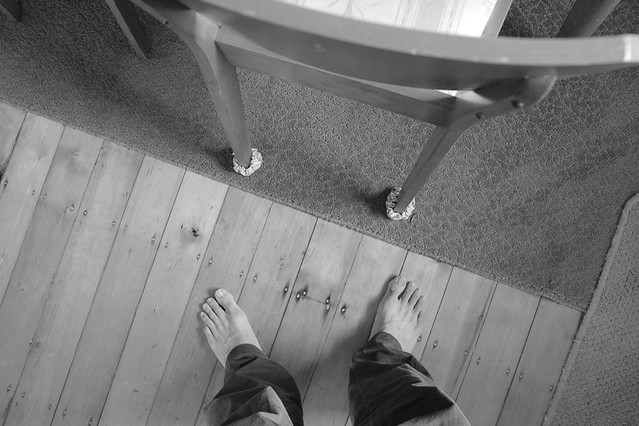
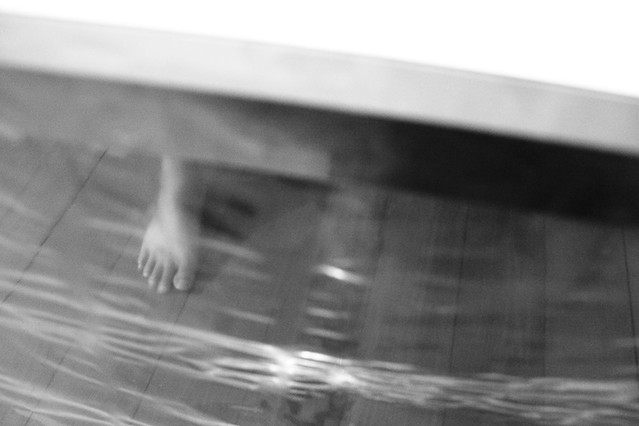
虽然没有伤心的例子,我还是找来了“无聊”的例子。我相信生活大部分的时间都是平凡/无聊的,所以我们要接受这个事实。别让“无聊”变成无题材、无新鲜感而放弃创作(摄影),因为创作(摄影)的挑战就在于 Martin Parr 所说的 "Find the extraordinary in the ordinary"。以下的照片都是非常无聊时拍摄的,并没有什么意义要传达,只是在练习构图。

The chair and my legs
My legs and the chair. 2012. Canon 550D.


Paul's leg
Paul's leg. 2012.

与爱摄影/创作的人们共勉之。

23 Jan 2012

Question #14

Question 14. It's already been done before.

To accept the notion that it has all been done before is to embrace clichés. The problem with clichés is not that they are erroneous, but that they are oversimplified and superficial articulations of complex concepts. Clichés are detrimental because they encourage photographers to believe that they have done a sufficient job of recording a situation when in fact they have merely gazed at its surface. The simple act of taking a photograph of Niagara Falls or a pepper is no guarantee that one has communicated anything essential about that subject. Good photographers provide visual clues and information about their subject for the viewer to contemplate. They have learned how to distill and communicate what is essential to them about their subject. By deeply exploring a theme and challenging cliché, photographers can reconstruct their sight of distorted, neglected, or other aspects of a situation and gain a fresh awareness and understanding.

R. Hirsch & J. Valentino (2001)

很多人都已经作过自相照,所以它的难度在于创新。自相照——如果作得恰当——是摄影者给自己寻找定位的方法。当我们曝露镜头背后的操控者,我们便提醒了观众:这是一张经过作者过滤而成的照片。照片是主观的。无论你多么随性地按下快门,或者认真地抛开感情,你都无法避免自己的情感左右照片。

我喜欢把摄影者看作学习掌控时间的学生。我们拍摄的同时,头脑就在努力地计算曝光的时间长短。准确来说,没有一张照片是绝对静止的(也就是说时间等于零秒),因为每张照片都至少涵括了某长短的时间(最短也有1/4000秒吧)。光的作图 (photo-graph-y)其中一个要素,就是让光在感光媒介上作最恰当的曝光时间。

Time keeper
Time keeper. 2011. Canon 550D.

14 Nov 2011

Question #13

Question 13. Some beginning photographers complain that there is no artistic subject matter in their locale.

Today a central characteristic of imagemaking is not only to create objects (photographs), but also to escape the restrictive parameters of their "objectness" through content. However, it is a common misconception to link content solely with the subject matter being represented. Photographs that affect people may have nothing to do with the apparent subject matter itself, and everything to do with the subsequent treatment of that subject. This realization creates limitless potential for subject matter.

Light and shadow are vital components of every photograph. This was recognized early in the medium's history by William Henry Fox Talbot's image The Open Door (1843), which demonstrated his belief that subject matter was "subordinate to the exploration of space and light." The quality of light striking a subject can reveal or conceal its characteristics, which will make or break a photograph.Light may be natural or artificial, but without the appropriate type of light even the most fascinating subjects become inconsequential. Ultimately, light is a principal subject of every photograph that imagemakers must strive to control and depict. As Talbot stated: "A painter's eye will often be arrested where ordinary people see nothing remarkable. A casual gleam of sunshine, or a shadow thrown across his path, a time-withered oak, or a moss-covered stone may awaken a train of thoughts and feeling, and picturesque imaginings." This is the realization that the subject in front of the lens is not always the only subject of the photograph.

R. Hirsch & J. Valentino (2001)

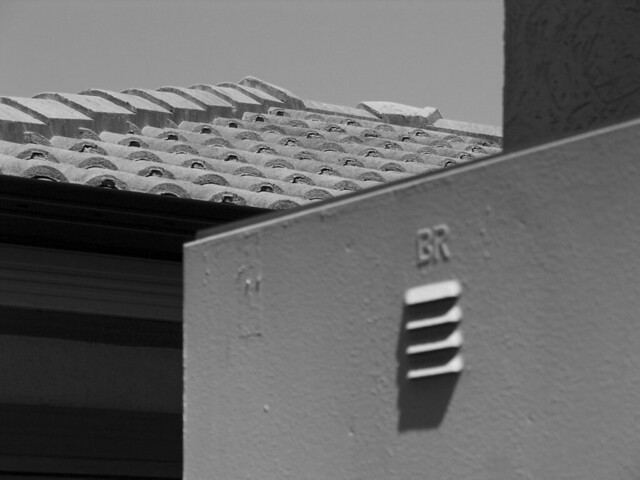
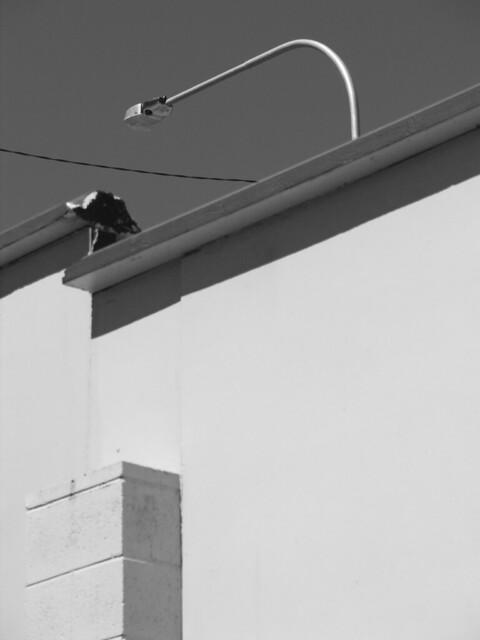
基本上 Hirsch & Valentino 要说的是,摄影师可以赋予一个物体另一层或另一面的涵义。被摄物的涵义不一定在于其身上,而可以是光和影所引发的思绪,或者物体被编排的方式,或者照片的 post-process。更何况,在你构图的时候你已经给眼前的景象重新定义了。这让人想起画家 René Magritte 耐人寻味的话:This is not a pipe

Geometric life #1
Geometric life #1. 2011. Canon G5. B&W conversion from RAW.
Geometric life #3
Geometric life #2.
Geometric life #2
Geometric life #3.

Hirsch & Valentino 并没有直接回答自己的问题,但是自问自答的同时却批评了那些埋怨自己没有机会去到漂亮景点摄影的人。这些人忘记了好照片并不一定需要漂亮景色、忘记了每件事物都有被摄的价值、忘记了生活的丑陋也可以很美(试问多少人去肮脏的后巷拍过挣扎求存的穷老头?)、忘记了珍惜近在身边的人。

上面 3 张照片,要表达的是我受困于城市生活中的无奈和纳闷。平常的事物也有被摄价值。也许上面的一番议论,只是我的酸葡萄心理在作怪,因为自己也是个没什么机会旅游去看漂亮景点的人。

8 Nov 2011

Question #12

Question 12. What are the disadvantages of digital imaging?

The vast majority of digital images continue to be reworkings of past strategies that do not articulate any new ideas. Manufacturers promote the fantasy that all it takes to be an artist is just a few clicks of a mouse or applying a preprogrammed filter. The challenge remains open: to find a native syntax for digital imaging. At the moment, this appears to be one that encourages the hybridization and commingling of mediums.

On the practical side, having a tangible negative allows one to revisit the original vision without worrying about changing technology. One could still take a negative that William Henry Fox Talbot made to produce his first photographic book, The Pencil of Nature (1843-1846), and make a print from it today. In 150 years will there be a convenient way for people to view images saved only as digital files? Or will they be technically obsolete and share the fate of the 8-track audio tape or Beta video system which most people can no longer access?

One does not have to be a Luddite to continue making analog prints. One reason to keep working in a variety of analog processes is that digital imaging tends to physically remove the maker from the photographic process. This is not a romantic notion or a nostalgic longing for the ways of the past. What often is lost is the pure joy of the atmospheric experience of being along in a special darkroom with an orange glowing light, the exhilaration of being physically creative as your body and mind work together to produce a tangible image. The making of an analog photograph is a haptic experience that does not occur while one is seated in a task chair, but involves the smell of chemicals, the sensory experience of running water as an image emerges in the developing tray from a white nothingness. A silver-based photograph never looks better than when it is glistening wet from its final wash. Ans regardless of how long one has been making prints in the darkroom, there is still that small thrill that your photograph "has come out" and now can have a life of its own.

R. Hirsch & J. Valentino (2001)


150 年之后(想一想为什么是 150 这个数字),我想数码相机将成为摄影师追求的复古品,就好像现在的我们收集旧相机、旧镜头和保留胶卷摄影这样。思考未来,我们可以看清现在的摄影趋势。
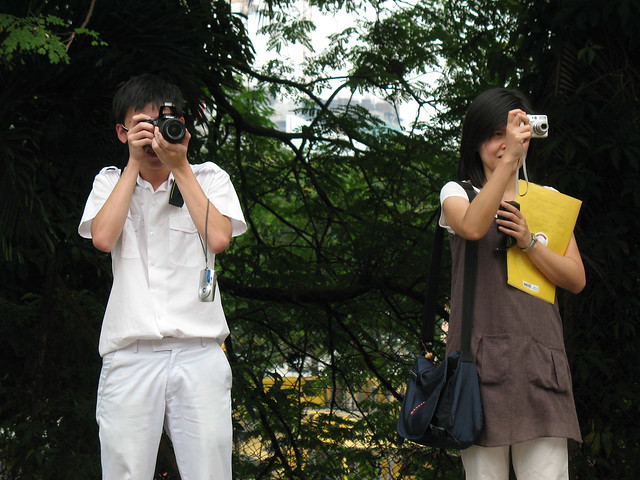
Digital cameras
数码相机。2008。Canon PowerShot A630。

不管你用什么款式的数码相机,你的动作和百年前的摄影师一样——举起相机、按下快门。分别只是在于事后不必冲洗就能看见图像。那么认真想想,数码摄影真的带来了很多影响吗?除了让人人能举起相机拍照,还有什么重大影响吗?数码摄影并没有创新——是,在科技上我们确实进步了很多很多,但是艺术方面呢?

摄影已经进入瓶颈很久了,只是没有人要大声说出来。

会用胶卷摄影的人形成自己的群体,继续他们的艺术创作,但是这些技术自古以来就没什么变化了;利用数码器材的人形成另一个群体,继续占领摄影界的大部分领地,但是他们的意见只在自己领地里交换着,没有能力购买器材或没有人脉的新手无法融入(而我将会在 Question #13 讨论 Hirsch & Valentino 如何产生专业摄影师和新手的代沟);“普通数码用户”则夹在中间,什么都不用理,快乐地分享着日常上的照片。
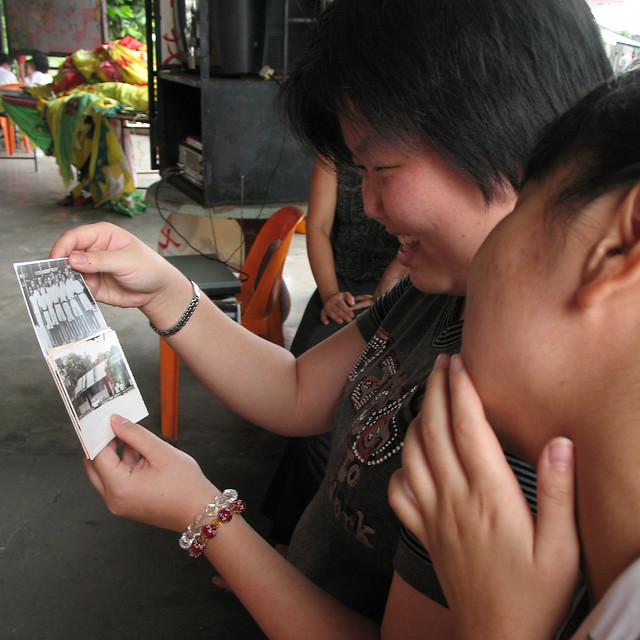

Looking at old photographs
回顾旧照。2008。Canon PowerShot A630。Cropped。

真正快乐的摄影师也许就是这些“普通用户”。150 年后,你的照片还会有价值吗?会不会很讽刺地,那些“普通用户”无意拍下的照片被未来人重视,而那些高昂摄影器材或者认真构图拍出的照片却被遗忘?现代人人手上有好相机,但摄影师和被摄对象之间的距离却越来越远。

想到这些,为什么我们还要认真地按下快门?古老的技术,能不能在现代摄影师的手中复活?新颖摄影工具的躯体,能不能被现代摄影师灌入灵魂?既然 150 年后的人会认为我们手上的数码相机非常值得收藏,那我们为什么不专心利用手上的相机、而跑去收藏旧时的 Nikon FM2 或者 Polaroid SX-70?现代更有趣的现象是,我们先进的数码相机里面有模仿胶卷或怀旧的效果。怀旧只能满足个人对快乐和兴趣的欲望,对摄影的发展却没有什么帮助。

你可以把上述统统看作废话,但是你不能不认真探讨一个问题:为什么摄影?

6 Nov 2011

Question #11

Question 11. What are the advantages of digital imaging over silver-based imagemaking?

As in silver-based photography, digital imaging allows truth to be made up by whatever people deem to be important and whatever they choose to subvert. While analog silver-based photographers begin with "everything" and often rely on subtractive composition to accomplish these goals, digitalization permits artists to start with a blank slate. This allows imagemakers to convey the sensation and emotional weight of a subject without being bound by its physical conventions, giving picturemakers a new context and venues to express the content of their subject.

R. Hirsch & J. Valentino (2001)

当然,Hirsch & Valentino 少说的是数码的“双便”——便利和便宜。不小心发明了一个不可能念到的词,双便……双便……话说回来,暂且不谈胶卷的独特,数码摄影确实让摄影师省了胶卷和冲洗的步骤(虽然自己冲洗印刷还是非常令人兴奋)和费用。费用!这就是为什么上一次扫描胶卷已是那么遥远的过去。不管摄影了多少年,构图还是很有挑战性,时时不得意。虽说数码让人可以作无数的尝试,下面几张照片还是没有一张是满意的。

Sea
Cliff attempt #1. 2011. Canon G5.
Cliff #1
Cliff attempt #2.
Cliff #3
Cliff attempt #3.
Cliff #2
Cliff attempt #4.

我想不管胶卷数码,摄影器材还是无法让你的照片好看或有意义。照片的内涵主要不是限制于你的器材,而是你的技术和思考。或许,还需要一颗永远不满足的心(不满足于摄影,并非不满足于器材)。

Good pictures are usually the provenance of artists, who are the ones worrying about creating better pictures, instead of making better cameras. This is why women make a disproportionately better share of good pictures than men: women aren't worrying about the gear.

Good photographers...have always been able to make great pictures, regardless of the technology at their disposal

Ken Rockwell in Don't Worry: Just Shoot

3 Nov 2011

Question #10

Question 10. How has digitalization affected photography?

Digitalization has shifted the authority of the photograph from the subject to the photographers by allowing them to extend time and incorporate space and sound. Photography is no longer just about making illusionistic windows on the material world or collapsing events into single moments. The constraints on how a photograph should look have broken down; they no longer have to be two-dimensional objects that we look at on a wall. This elimination of former artificial barriers is also good for those who wish to practice the art and craft of photography because it encourage makers to open the doors of perception to new ideas and methods for making photographs.

R. Hirsch & J. Valentino (2001)


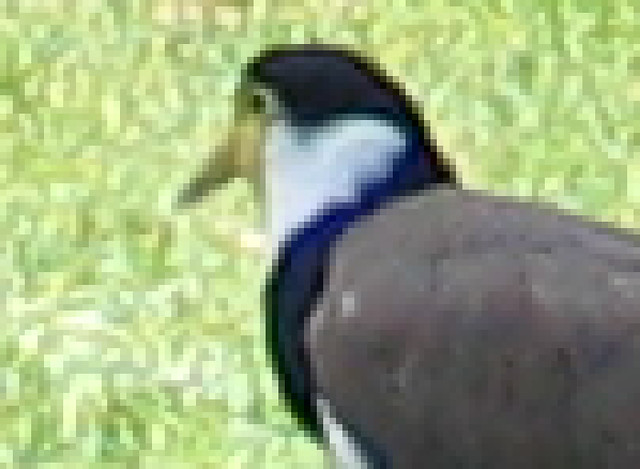
三个月前的灵感,这次我发现如何避免 Photoshop 把放大的 pixel 模糊化成顺顺的点线面(因为我就是要突显 pixel)。当你改 image size 时(Image > Image Size),记得把最下面的选项栏从 Bicubic (best for smooth gradients) 换成 Nearest Neighbour (preserve hard edges),那么pixel 就会保持原状、被放大突显。

The digibird
The digitbird, Vanellus digitalleus. 2011. Canon G5. Cropped and enlarged at 6.4X.

当你捉到和承认 pixel 的存在时,你才能体会到数码摄影的整个成像过程。这好比,当你承认生物是由小小细胞(或者万物基于12种微粒+4种力?)时,你才能体会生命的奥妙。当你在阅读这个句子时,你的脑细胞正在和它的邻居细胞沟通!是的,这种奥妙并非在于这些小小个体,而是在于这些小小个体之间的互动。

The beauty of a living thing is not the atoms that go into it, but the way those atoms are put together.
Carl Sagan in Cosmos (1980)

对于摄影而言,一张照片的冲击、张力、感动、内容和奥妙则产生于每一个 pixel (或者银化合物)被激发后的排列。简单的道理、简单的排列,就能让你的大脑知道这是一只鸟(或者更精确地说,Vanellus miles)。当你按下快门,一个个体就出生在此宇宙中。

24 Oct 2011

Question #9

Question 9. Are the issues surrounding truth and beauty still relevant to photographers of the twenty-first century?

During the past 25 years, issues of gender, identity, race, and sexuality have been predominant because they had been previously neglected. In terms of practice, the artistic ramifications of digital imaging have been an overriding concern. But whether an imagemaker uses analog silver-based methods to record reality or pixels to transform it, the two greatest issues that have concerned imagemakers for thousands of years - truth and beauty - have been conspicuously absent from the discussion. In the postmodern era irony has been the major form of artistic expression.

Although elusive, there are certain patterns that can be observed that define a personal truth. When we recognize an individual truth it may grab hold and bring us to a complete stop - a total mental and physical halt from what we were doing - while simultaneously experiencing a sense of clarity and certainty that eliminates the need for future questioning.

Beauty is the satisfaction of knowing the imprimatur of this moment. Although truth and beauty are based in time and may exist only for an instant, photographers can capture a trace of this interaction for viewers to contemplate. Such photographs can authenticate the experience and allow us to reflect on it and gain deeper meaning. Our passionate pursuit of beauty has been observed for centuries. The history of ideas can be represented in terms of visual pleasure. In pre-Christian times Plato stated: "The three wishes of every man: to be healthy, to be rich by honest means, and to be beautiful." More recently American philosopher George Santayana postulated that there must be "in our very nature a very radical and widespread tendency to observe beauty, and to value it."

R. Hirsch & J. Valentino (2001)

两件事情——婚宴和那个要跳舞的小女孩

小丽、小明和小华。2006。Sony P71。

每个小丽、小明和小华成长后,是不是都会失去赤子之心?所谓的成熟能不能和赤字之心共存?所谓的大人是不是都抛弃了真善美?什么又是真、善、美?

回顾过去,我的照片文字从简单的生活叙事,演化成了今天的讽刺、现实和议论。最近整理中国台湾游学的帖子,发现间隔3年,思考模式变化甚多。我是不是无意间加入了 Hirsch & Valentino 所提到的 postmodern irony 行列,而忽略了 truth and beauty

最近不少年轻人加入婚宴摄影的行列,别人问起为什么我不赚点钱。我很快地回答说,美满幸福的夫妇不需要我的帮忙,如果我要找工我也要申请前线报道。灾难、政治纠纷、战争、环境问题、贫穷、饥饿……我告诉女友说这么 critical 的思考才能辨析人事,但是静下来反省后,发现自己忽略了一些生活态度。

什么又是真、善、美?也许它们根本不存在世上,而只存在于人的信念之中。

18 Oct 2011

Question #8

Question 8. How is the meaning of a photograph determined?

Meaning is not intrinsic. Meaning is established through a fluid cognitive and emotional relationship among the maker, the photograph, and the viewer. The structure of a photograph can communicate before it is understood. A good image teaches us how to read it by provoking responses from the viewers' inventory of life experiences. Meaning is not always found in things, but sometimes between them. An exceptional photograph creates viewer focus, which produces attention, which can lead to definition. As one mediates on what is possible, multiple meanings may begin to present themselves.

R. Hirsch & J. Valentino (2001)

摄影师享有一项权利——有时是他的任务——那就是为图像注入意义。


清道夫,Street cleaner。2011。Canon 550D。

一个洋人清道夫在 Brisbane 的唐人街 (Chinatown, Fortitude Valley)上扫除垃圾。他细心的工作态度,让后方站着观看的亚洲人显得像正在监督的老板。按下快门后才发现的倒三角形构图,仿佛暗示着颠倒的宾主关系。亚洲实力的崛起,让西方(或者南边的澳洲)开始感到压力。另一点是,反观马来西亚,本地人不屑干这种低等工作,却埋怨外劳数量增加。洋鬼子穿上制服扫地,好汉一个,也没有市民小看他。


Party, 宴. 2011. Canon 550D.

Brisbane River 烟花盛放之前,河边的高级餐厅的阳台上是一些富有人家。从一个穷留学生的仰角看去,他们是多么地高高在上。或许是我的嫉妒,我把他们关在钢柱后,赋予他们囚犯的形象——被富豪、地位、权利和面子囚禁的可怜虫。

看见我的文字之前,这些照片对你而言,是否有着不一样的意思?

17 Oct 2011

Question #7

Question 7. What makes a photograph interesting?

A significant ingredient that makes a photograph interesting is empathy, for it gives viewers an initial path for cognitive and emotional comprehension of the subject. Yet the value of a photograph is not limited to its depiction of people, places, things, and feelings akin to those in our life. An engaging image contains within it the capacity to sensitize and stimulate our latent exploratory senses. Such a photograph asserts ideas and perceptions that we recognize as our own but could not have given concrete form to without having first seen that image.

R. Hirsch & J. Valentino (2001)

老鹰捉小鸡。2008。Sony P71.

如果你不知道这张照片的内容,想必你已经关掉页面不看下去了。

如果你继续看下去,一就是你知道照片在叙述什么,二就是你好奇又得空,三就是这张照片无意间和你的某某记忆产生了共鸣。

 “好”照片是主观和相对的评价。每个人对“好”都有不懂的诠释,每个人都觉得自己的照片不错,每个人都觉得著名摄影师的照片是好的,每个人都觉得初学者的照片只是“尚有进步空间”。“好”照片在另个人眼中也只不过是“不怎么”。以上照片是一架用了很久的相机,在有限的功能下,在我错误的操控下,使尽全力地挤出所有资讯——就好像现在我的脑一样, 使尽全力地回顾过去。我们不都如此吗?回忆将在脑中渐渐淡化,越来越白。直到一天,我们想要回忆时,却只剩下空白。

不管手法、器材或科技的优缺,一张照片的内容才是灵魂所在。

13 Oct 2011

Question #6

Question 6. What can images do that language cannot do?

An accomplished photographer can communicate visual experiences that remain adamantly defiant to words. The writer Albert Camus stated, "If we understood the enigmas of life, there would be no need for art." We know that words have the power to name the unnameable, but words also hold within them the disclosure of a consciousness beyond language. Photographs may also convey the sensation and emotional weight of the subject without being bound by its physical bound by its physical content. By controlling time and space the photo-based images allow viewers to examine that which attracts us for often indescribable reasons. They may remind us how the quickly glimpsed, the half-remembered, and the partially understood images of our culture can tap into our memory and emotions and become part of a personal psychic landscape that makes up an integral component of identity and social order.

R. Hirsch & J. Valentino (2001)

我必须承认第六个问题打败了我。我没有足以回答它的照片。因为我和我的相机没有经过子弹、泪血、灾难、呐喊、黑暗和火光的洗礼。当然还有那些浪漫、感动、绚丽、激情、温馨和童真。

12 Oct 2011

Question #5

Question 5. Why is it important to find an audience for your work?

Part of a photographer's job is to interact with and stimulate thinking within the community of artists and their world at large. Without an audience to open a dialogue the images remain incomplete and the artist unsatisfied.

R. Hirsch & J. Valentino (2001)

不停断的正、负回馈。2007。令人怀念的 Canon 350D。

还是这张照片最能表达我现在缺乏的学习宝器——回馈。习惯了中学的团体生活,那种几乎永不停断的正回馈(鼓励)和负回馈(纠正),曾是我们用来的检讨和求进步的宝。无论现场或幕后多么地紧凑和凌乱,你还是能找到一个提供意见的伙伴。

我做得如何?我还能如何做得更好? 别人的眼睛可以看见自己所忽略的角落。

我需要更多意见,更多回馈,更多批评,更多辩论。多多益善!

10 Oct 2011

Question #4

Question 4. Why is photography important to us as individuals and collectively as a society?

Recently a reporter asked a group of tornado survivors what their most irreplaceable object has been. One after another said the same thing. The one thing they wanted to recover from their ruined homes was their snapshots. Their other material possessions eventually could be replaced. This reveals the crux of why people photograph: to save and commemorate a subject of personal importance. The image may be memory jog or an attempt to stop the ravages of nature and time. Regardless of motive, this act of commemoration and remembrance is the critical essence of both amateur and professional photographic practice.

What does this mean in terms of artistic practice at the beginning of a new century? There are more options than ever to pursue. Whether the images are found in the natural world, in a book, or on a screen, part of an imagemaker's job is to be actively engaged in the condition of "looking for something." How this act of looking is organized, its particular routines, uncertainties, astonishments, and quixotic complexities, is what makes photographers unique.

R. Hirsch & J. Valentino (2001)

Still, we laugh even when we forgot why. 2007. Sony DSC-W55.

曾经信心饱满地说,我会记得每一张照片的拍摄过程和内容。Hmmm…现在我倒忘了这张照片是我还是院儒拍的了。甚至忘了自己用过 Sony DSC-W55。可是当我看回这些照片,当时的情绪会油然而生。忘记了发生什么事、说什么笑话,但是仍然会觉得滑稽,然后不懂原因地笑。

那种纯粹由光引发的化学反应, 从数亿个脑神经中激发出那一丝回忆。

我说除了 Hirsch 和 Valentino 所说的 "actively...'looking for something'",摄影师有时需要 let your eyes open freely such that their are constantly accessible for the unexpected,才能及时捕捉亲友之间无常的神情举动。

9 Oct 2011

Question #3

Question 3. What does a photographer do?

A photographer contemplates the nature of making photographs, the cerebral and emotional drive of working with a subject and process. Once this is accomplished, the photographer can then act to provide a physical form in which time can be manipulated or suspended to allow a subject to be thoughtfully examined.

Good photographers also take the time to wonder about their world and ponder how they can best analyze and express their thoughts and feeling to others. Wondering is part of the thinking process that lets one meditate on the possibilities. Wondering is a form of questioning old ways of knowing and can result in new ideas and different directions. Wondering encourages image-makers to summon the courage to take untested courses of action. Without wonder there is no speculation, which makes art and life boring and static.

R. Hirsch & J. Valentino (2001)

The photographer and his subject looking at a same object. 2008. Nikon D40X. Cropped.

我想 Hirsch 和 Valentino 没有提到的是摄影师和摄影对象的互动。身为一个东方人,我(和一些摄影的朋友们)都比较被动,难以找到前去攀谈的动力。可是这举动往往是揭发摄影对象背后故事的好方法。摄影师有时候是被引导的人 (passive)。当摄影师放下自己的习惯时,往往会被摄影对象引导至另一个新世界。

8 Oct 2011

Question #2

Question 2. What can one do to become a photographer?

Looking at photographs can be a primary activity. Photographs are made from other photographs, as well as drawings, paintings, and prints. Look at what drives your curiousity. Look at the classics. They have been preserved because the patterns recorded in them have proved to be invariably useful over time. Look at contemporary work that is wrestling with new and different ways of expressing ideas. Read, study, and practice different methods of photography, not for the sake of technique, but to discover the means to articulate your ideas. Step back from the familiar to better understand it. One big peril facing photographers is lack of commitment, which translates into indifference in their work. Talking, thinking, and writing about photography are vital components of understanding the process, but these activities do not make one a photographer. Ultimately, to be a photographer one must fully engage in the process and make photographs (usually lots of them).

R. Hirsch & J. Valentino (2001)

The man who sat beside me on a bus. 2011. Canon G5. B&W conversion from RAW.

当你开始阅读更多摄影的文章时,你会发现越来越多派别、风格和意见——因为摄影是非常个性化的活动。其中一个让我觉得又刺耳又被激励又有趣的是两个摄影师的辨论。Ken RockwellPetteri Sulonen 针对 RAW format 发表了个人意见,而我这种刚入门的学生被夹在中间,不懂要听谁的。Rockwell 主要的论点是有能力的摄影师靠 jpeg 就能创作好的照片,而且 RAW 对一般人是没有实际用途的(相机的科技已经能提供高素质的 jpeg);Sulonen 则反驳说只要适当地运用,RAW 能提供一个更高的平台(要看例子就按他名字的 link)。

我要说的有三点:
  1. RAW 激发思考。实际上每一张 jpeg 照片都是经由相机自己处理过的,也就是说,我们一般的照片都是相机帮我们做主的。而我要问的是,为什么不偶尔自己为自己的照片作主呢?这跟自己煮饭或在餐厅叫菜一样。以上的照片是用 Photoshop 来将彩色手动转换成黑白的。如果让相机的 Grayscale mode 来决定的话,我无法凸现乘客的皱纹和裤子质感;
  2. 按下快门前,如果你相信自己的判断会好过相机本身,那就拍 RAW。但是不要抱着“以防万一”的心态来拍 RAW,这样让人懒惰;
  3. RAW 完工后还是要存成 jpeg (或者 tif——如果你电脑大把空位)。可是,无论成品的素质在电脑荧幕上多么地好,上传到很多免费的网站后,照片素质还是会降低。看看以上照片椅背的影子找到瑕疵了(一块块“淤血”)。我发现 Blogger (Google Picasa)会将黑暗部分的素质降到很低。

24 Sept 2011

Question #1

Question 1. Who is a photographer?

A photographer is a person who has decided to become and pursue the life of a photographer.

R. Hirsch & J. Valentino (2001)

Framing. 2011. Canon 550D.

从万物中框取自己要的视角,以表达自己要叙述的故事。摄影师并没有很特别,他/她和作家、画家一样。纪录,表现,传达,沟通,创作。唯一特别的是,我们就地取材。